The road to 100 is paved with possibility. The journey, driven by ingenuity.
And for Continental A.G., the road to 100 is defined by responsibility. Because when it comes to tire manufacturing, Continental isn't just focused on bringing to market a 100-percent sustainable materials tire. It's determined to lead the industry, too. Copper Colored Yarn
Subscribe to Rubber News now for award-winning news and insight.
"Continental is on the road toward becoming the most progressive manufacturer in the tire industry in terms of sustainability," Claus Petschick, head of sustainability at Continental Tires, said in a statement Feb. 14.
That aim begins with a goal to use 100-percent sustainable materials in its tires by 2050. And Continental is confident it can make that goal. It does, after all, use 15- to 20-percent renewable and recycled materials in its standard passenger car tires today.
To achieve its goal, Conti will need the right materials. Here's a look at five sustainable options that are going to help Continental reach its 100-percent sustainability goals.
Tires need natural rubber. A lot of natural rubber. Their performance depends on it.
And hevea has, for more than a century, been that key component for tire makers and their products, accounting for as much a 40 percent of the entire weight of modern high-performance tires, according to Continental.
Today, the tire industry accounts for more than 70 percent of the natural rubber demand. And for good reason.
"Natural rubber is essential for ensuring outstanding tire performance," Continental said. "… Its special properties include the high level of strength and durability, which are caused by the strain-induced crystallization of the rubber."
Hevea is sustainable in that it is renewable. But it is only truly sustainable if it is sourced sustainably.
So Continental is committed to ensuring that the hevea rubber it does use is exactly as sustainable as the company believes it to be.
Late last year, Continental debuted NR tracking technology that has great promise in helping to ensure that the natural rubber it uses is sustainably sourced. With its partner Security Matters Ltd. (SMX), the technology uses an "invisible marker" that could help track the origins of natural rubber in tires. The substance, Continental said, does not alter the materials used in the tire, preserving performance and quality.
There are other ways to ensure more sustainable natural rubber. Alternative natural rubbers, for instance.
For Continental, dandelion rubber could be the answer to the alternative NR question. It offers an opportunity to supplement the amount of natural rubber used in tires and provides sustainability based on its shorter supply chain.
"The primary focus of our Taraxagum Project is to reduce long transport routes of natural rubber from its current area of origin–mainly Southeast Asia," Petschick told Rubber News in September. "So, we are working on replacing natural rubber from trees with natural rubber from dandelions."
Already, the tire maker has rolled out a bicycle tire that uses the dandelion-derived latex in its compound. And it is among the earliest of examples of how the material can add sustainability to tire products without compromising on performance.
"A few years ago, we were already able to build car and truck prototypes from dandelion rubber and test them very successfully, but we currently still lack the sufficient quantity of material for series production," Petschick said.
And this, Petschick said, is where partnerships will be key.
"Together with our partners we are conducting intensive research into the breeding and regional cultivation of Russian dandelion and its scalability," he said in September. "We are confident that in a few years we will also be able to produce and market car and truck tires in relevant quantities."
What if you could make more sustainable tires and keep the planet a little cleaner in the process? Continental thinks it can.
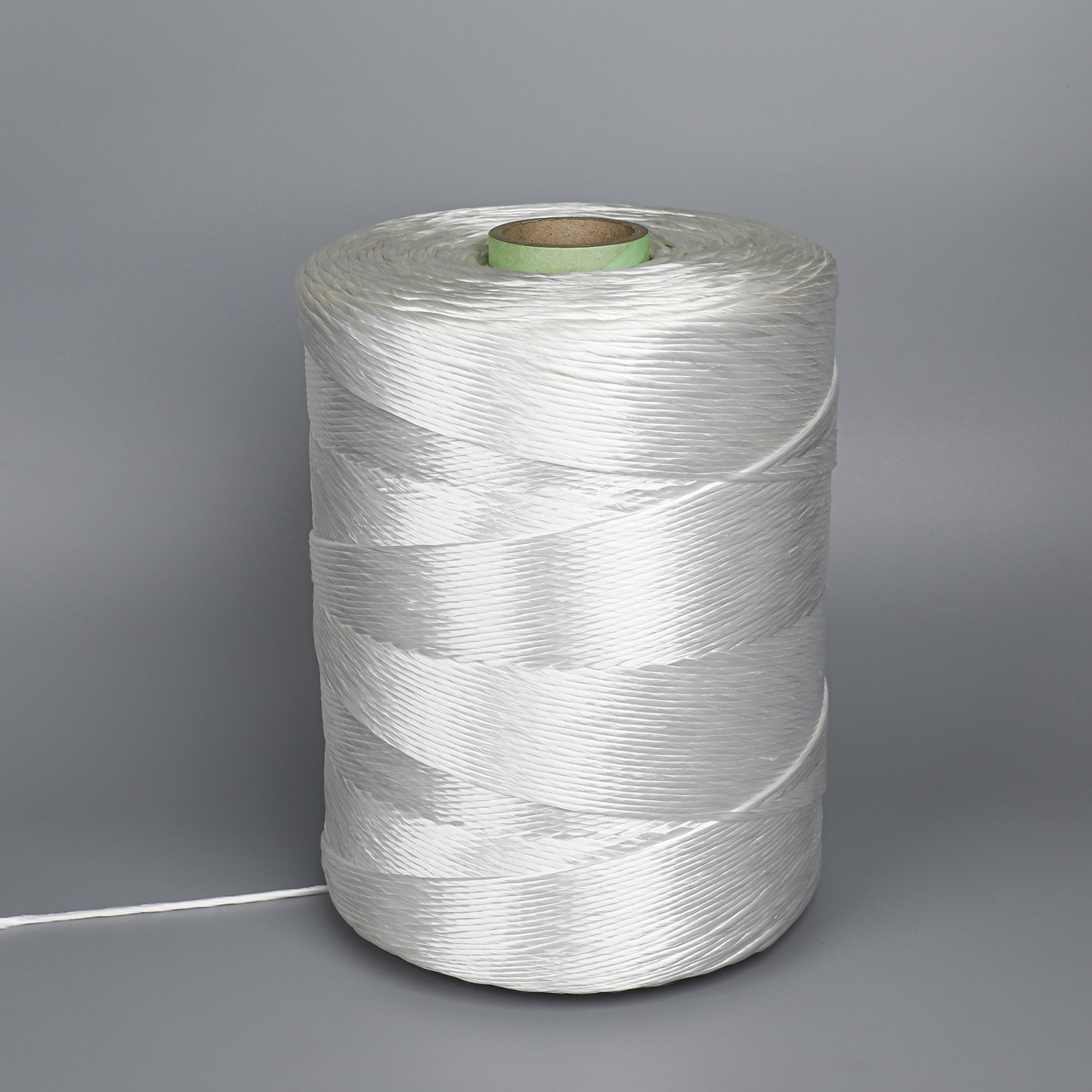
Enter ContiRe.Tex technology, which is focused on producing high-quality polyester yarn from recycled plastic bottles. The technology allows Continental to reuse between nine and 15 plastic bottles for each tire, depending on the tire size.
Moreover, the recycled PET has proven to be a replacement for conventional polyester used in the tire casing structures.
"Continental is the first tire manufacturer who has started volume production of recycled polyester yarn, which is obtained from recycled PET plastic bottles in a new process," Petschick told Rubber News in September. "A set of standard passenger car tires uses the material from around 40 recycled PET bottles."
And those tires made with recycled plastic bottles already are on the market in the EcoContact 6, PremiumContact 6 and AllSeasonContact tire lines in Europe.
By 2050, Continental won't just have fully sustainable tires, it plans to have fully circular tire production as well.
Simply, Continental wants to take old tires and make them better, brand-new Continental tires.
This includes recycling rubber, steel and textile cord through what the tire maker calls "a highly sophisticated process." And this is just the start.
"Recycled raw materials are going to play a big role in making tires more sustainable. We use recycled materials whenever possible," Petschick said in a Feb. 14 statement, adding that the quality of the recycled materials remain key. "Comparable quality and material properties to conventional raw materials are crucial for us."
Carbon black, also, is proving to be one of those extremely promising recyclable materials, and the tire maker is partnering with Pyrum Innovations to help make that a reality. Pyrum will help Continental bring to scale the operations needed for recycled carbon black and other materials, such as pyrolysis oils.
"To do this, Pyrum breaks the old tires down into their constituent parts in an industrial furnace using a special pyrolysis process," Continental said. "In this way, valuable raw materials contained in end-of-life tires can be extracted and recycled. Both companies are working toward obtaining high-quality raw materials from the pyrolysis oil obtained for Continental's tire production in the medium term, in addition to the direct use of high-quality carbon black."
When it comes to tried-and-true tire fillers, Continental is aiming for more sustainability there, too.
Take silica for one. The material, after all, is essential to optimizing characteristics such as grip, rolling resistance and service life. And while it's critical, it could be more sustainable, too, thanks to rice husks.
Continental is exploring the use of silica made from rice husk ash in its tires.
"Rice husks are a waste product of rice production and cannot be used as food or animal feed," Continental said. "Silica derived from the ash of rice husks is more energy-efficient when used in manufacturing than that obtained from conventional materials such as quartz sand."
Other plants have promise as well, particularly when it comes to creating bio-based oils and resins that can be used to replace petroleum-based products in its tire. So far, the tire maker has found successes with rapeseed oil and resins derived from materials in the paper and wood industries.
And all of this is smaller part of a much bigger picture for the world's fourth-largest tire maker.
"We continuously invest in research and development around innovative technologies, sustainable materials, and environmentally friendly production processes," Petchick told Rubber News in September. "… Sustainable and responsible management enhances our capacity for innovation and the future viability of our Tires business. We want to shape a sustainable future and reduce adverse impacts along the entire value chain with our products, services, and operations."
Rubber News wants to hear from its readers. If you want to express your opinion on a story or issue, email your letter to Editor Bruce Meyer at [email protected] .
Please enter a valid email address.
Please enter your email address.
Please select at least one newsletter to subscribe.
Staying current is easy with Rubber News delivered straight to your inbox, free of charge.
Subscribe to Rubber News to get the best coverage and leading insights in the industry.
To serve companies in the global rubber product industry by delivering news, industry insights, opinions and technical information.
75 Denier Polyester Yarn 2291 Riverfront Pkwy, Suite 1000 Cuyahoga Falls, OH 44221